


News & Blog Posts
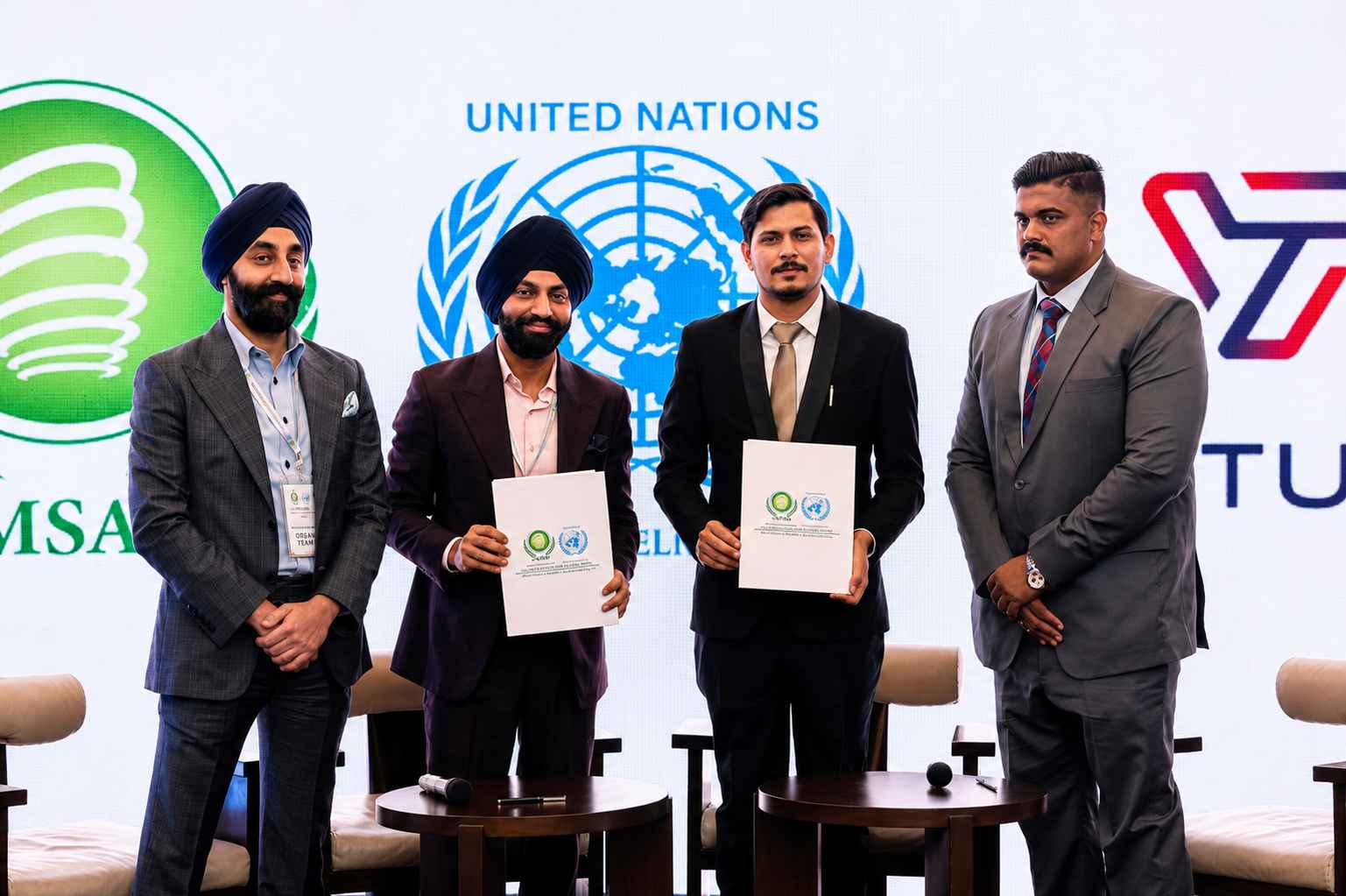
IIMSAM and Victura Technology Pvt. Ltd. Sign Strategic MoU to Advance Innovation, Research and Sustainable Development
IIMSAM and Victura Technologies Formalize Strategic Partnership to Advance Nutrition Innovation and Sustainable Development
New Delhi, India — Signed agreements in international development are most honestly measured not by the gathering at which they are concluded, but by the community-level outcomes they eventually produce. It is against that standard that the Memorandum of Understanding (MoU) signed between IIMSAM — the Intergovernmental Institution for the Use of Micro-Algae Spirulina Against Malnutrition and Victura Technologies Pvt. Ltd. on 15 June 2026 must ultimately be assessed. The agreement, formalized in New Delhi during IIMSAM's Foundation Day celebrations in the presence of diplomats from over twenty embassies and senior policymakers, establishes a structured framework for cooperation across digital nutrition research, capacity building, humanitarian programming and community development.
The collaboration represents a conscious strategic change for IIMSAM: an understanding that converting spirulina's well-established nutritional potential into scalable, evidence-based programs necessitates not only institutional standing and scientific knowledge but also the kind of digital infrastructure and applied research capability that the technology sector is better equipped to supply.
IIMSAM: Mandate, Institutional Standing and the Case for Spirulina
As a Permanent Observer to the United Nations Economic and Social Council (ECOSOC), IIMSAM occupies a formal position within the multilateral system, enabling it to engage governments, intergovernmental bodies and the private sector from within the architecture of the United Nations rather than from outside it. Its mandate focuses on spirulina, a nutrient-dense micro-algae whose high protein, iron and essential amino acid content has made it a subject of sustained scientific interest as a tool against protein-energy malnutrition, particularly in settings where conventional food systems are unable to deliver adequate nutrition at speed or scale.
Both the Food and Agriculture Organization (FAO) and the World Health Organization (WHO) have recognized the nutritional potential of micro-algae in supplementary feeding contexts. As climate pressures and supply chain fragility increase the vulnerability of existing food systems, the relevance of low-cost, scalable nutrition solutions like spirulina has only grown. What has distinguished IIMSAM's recent institutional trajectory is its recognition that technical knowledge alone is not sufficient: bringing a nutrition solution to scale requires partnerships, digital infrastructure and research capacity that extend well beyond what any single intergovernmental body can develop alone.
Why Technology Has Become Essential to Nutrition Security
A long-standing gap in humanitarian nutrition programming the gap between what academics know, what programs create, and what people actually receive has started to decrease thanks to digital tools. Technology-enabled monitoring, digital supply chain management, and real-time data collecting have all shown quantifiable gains in program delivery in a variety of national contexts. This directly affects IIMSAM, whose work focuses on a particular nutrition intervention: creating spirulina-based programs that can garner institutional support and scale to meaningful reach necessitates the kind of digital program design and evaluation capacity that the Victura partnership aims to develop.
This connects directly to three of the United Nations Sustainable Development Goals. SDG 2, Zero Hunger, calls for the end of all forms of malnutrition by 2030 not just hunger, but the full nutritional deficit. SDG 3, Good Health and Well-Being, encompasses the nutritional health dimensions of IIMSAM's programming. And SDG 17, Partnerships for the Goals, frames cross-sector collaboration between intergovernmental institutions, technology companies and research bodies as a structural requirement for reaching the others, not an optional supplementary mechanism.
The Strategic Partnership with Victura Technologies
IIMSAM and Victura Technologies will work together on joint humanitarian and nutrition programs, academic research and publications, policy advocacy, capacity building and training, pilot field interventions, researcher exchanges, SDG awareness campaigns, and technological innovation under the terms of the Memorandum of Understanding. The allocation of duties demonstrates true complementarity: Victura Technologies provides technological capabilities, academic infrastructure, and implementation support, while IIMSAM offers international expertise, strategic direction, and access to its diplomatic and institutional network.
For the duration of the three-year agreement, which is renewable by mutual permission, a Joint Coordination Committee with specific focal points at each institution will supervise planning, monitoring, evaluation, and reporting. This governance structure is important because it establishes shared records of decisions and results that governments, funders, and partner institutions can review, as well as accountability mechanisms that extend beyond the initial goodwill of the signing.
“Technology is a powerful enabler of humanitarian impact,” said Dr. Sahil Singh, IIMSAM's Ambassador for Strategic Partnerships and UN SDGs. “By combining IIMSAM's international expertise and network with VTPL's capabilities in digital innovation and research, we aim to create programmes that are both evidence-based and scalable.” Engineer Asif Ayoob, IIMSAM's Ambassador to India, placed the partnership squarely within the SDG framework: “International cooperation of this nature is precisely what SDG 2 and SDG 3 demand of us.” Mr. Harbir Singh, Director of Victura Technologies, affirmed the company's intent: “We believe that digital innovation and social responsibility must go hand in hand.”
Looking Ahead: From Agreement to Impact
The first signs of whether the partnership's implementation pace aligns with its strategic ambition will be the creation of the Joint Coordination Committee and the activation of trial projects. The second and third years of the agreement will probably see the appearance of research results, which have longer lead times. In the same time frame, the collaboration could make a significant contribution to conversations about incorporating spirulina-based nutrition solutions into community nutrition monitoring systems and digital health platforms—areas where Victura's technical expertise and IIMSAM's institutional network are truly complementary.
Running alongside these institutional efforts is IIMSAM's One Bottle One Life Spirulina (OBOLS) initiative, the institution's community-facing campaign for direct spirulina nutrition support and public awareness. Where the Victura MoU builds research infrastructure and programme design capacity, OBOLS operates at ground level, reaching communities directly. The two tracks are complementary: institutional partnerships without community reach serve no one, and community campaigns without a technical and evidence base cannot sustain themselves at scale.
Conclusion
It is preferable to think of the IIMSAM-Victura Technologies relationship as a framework—the circumstances that lead to impact rather than the impact itself. Both organizations contribute real and unique qualities to the partnership: Victura's technological infrastructure and research capacity, and IIMSAM's multilateral status, scientific mandate, and diplomatic reach. As usual, the quality of the implementation that follows the signature will determine whether those strengths result in quantifiable nutrition results for the communities this program is intended to assist.
References
IIMSAM India. (2026, June 15). United Nations IIMSAM signs MoU with Victura Technologies to advance technology-driven humanitarian and nutrition programmes [Press release].
United Nations. (2015). Transforming our world: The 2030 Agenda for Sustainable Development (A/RES/70/1). United Nations General Assembly.
Food and Agriculture Organization of the United Nations. (n.d.). FAO and nutrition. https://www.fao.org
World Health Organization. (n.d.). Malnutrition. https://www.who.int/news-room/fact-sheets/detail/malnutrition
Search Here

Blog Categories